
How AI Age Detection Actually Works: The Science Behind Facial Age Analysis
Ever wondered how an AI can look at your photo and instantly tell how old you look? It's not magic – it's a fascinating blend of computer vision, deep learning, and years of research into facial aging patterns. In this article, we'll dive deep into the technology that powers AI age detection and help you understand what's happening when you upload your photo.
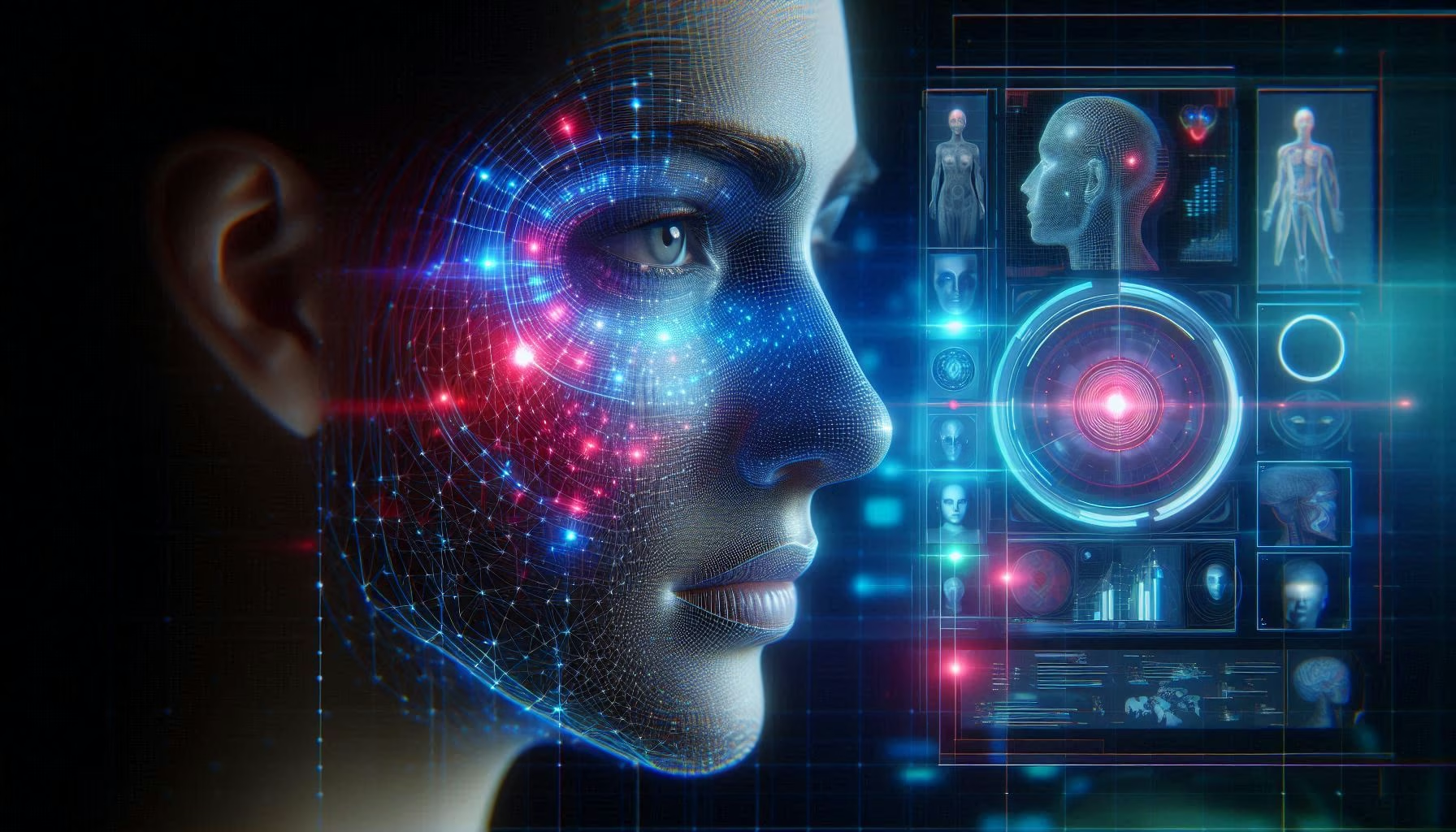
The Foundation: Teaching Computers to "See" Faces
Before an AI can estimate your age, it first needs to understand what it's looking at. This process involves several sophisticated steps:
1. Face Detection and Localization
When you upload a photo, the AI's first job is to find your face in the image. Modern face detection algorithms use Convolutional Neural Networks (CNNs) – a type of AI specifically designed to process visual information.
The system scans the image looking for patterns that indicate a human face:
- Oval or circular shapes
- Two eyes positioned above a nose
- A mouth below the nose
- Skin tone variations
- Facial symmetry
Once detected, the AI creates an invisible "bounding box" around your face, isolating it from the background for detailed analysis.
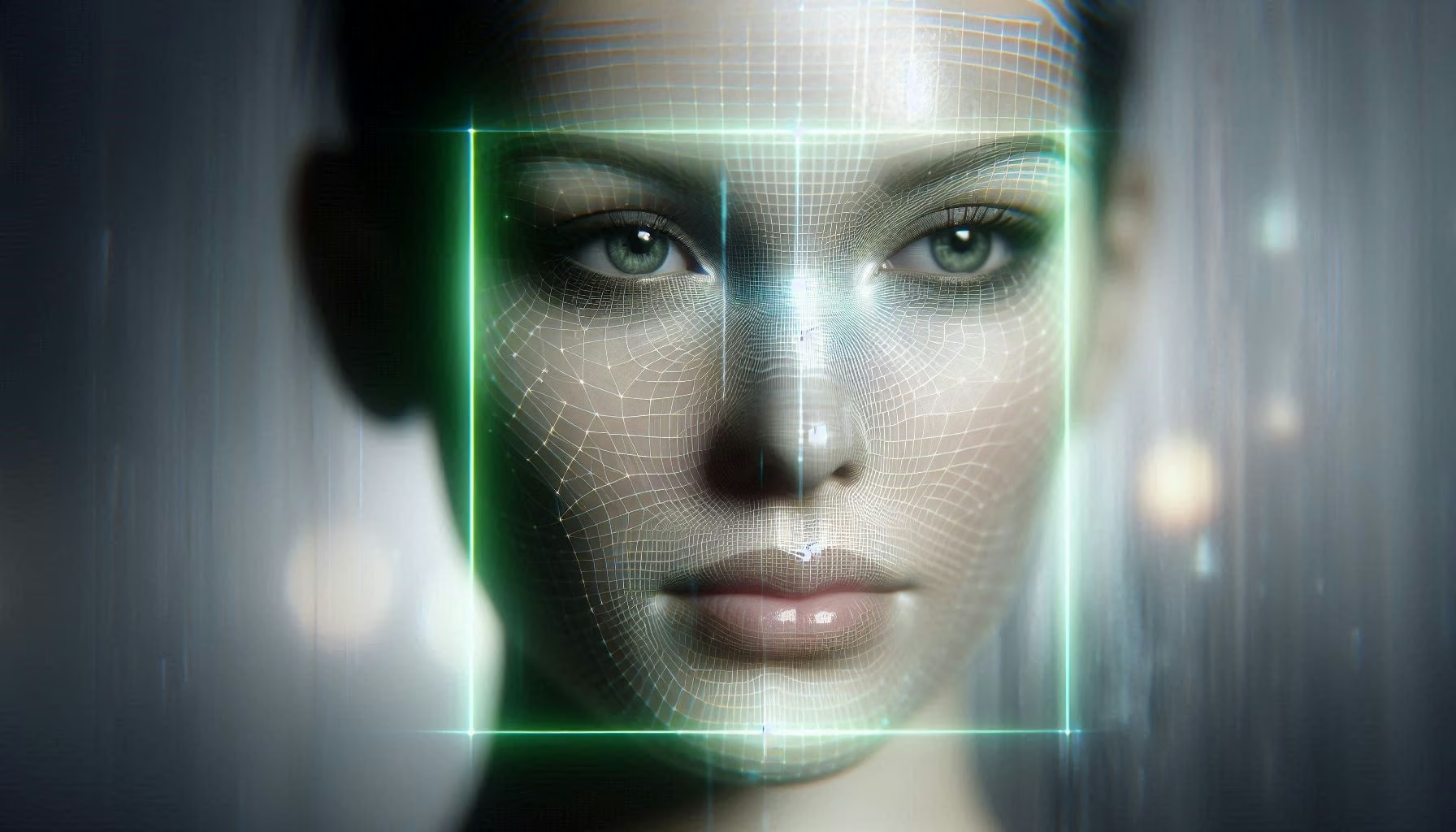
2. Facial Landmark Mapping
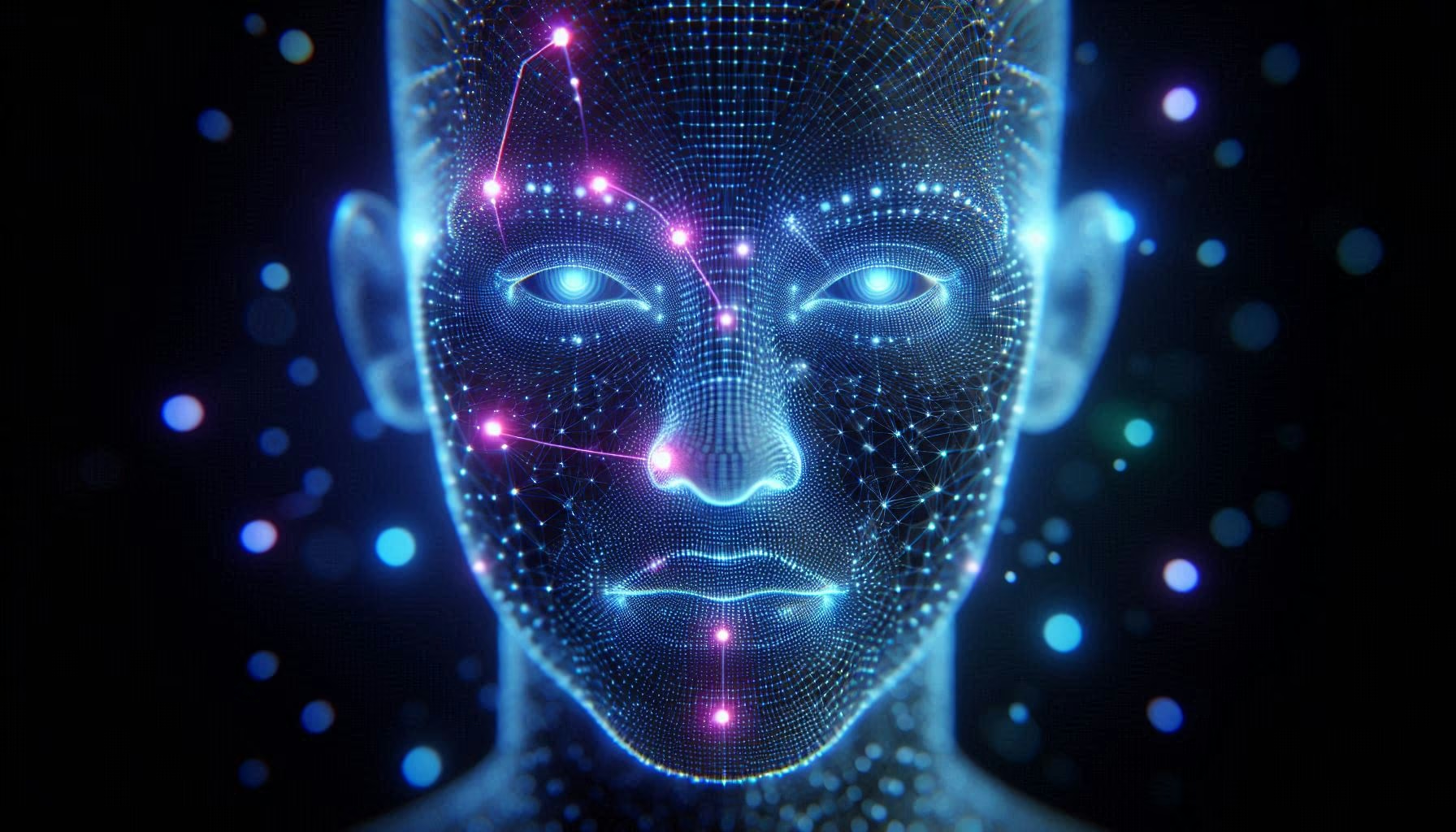
After detecting your face, the AI identifies specific facial landmarks – critical points on your face that serve as reference markers. Modern systems can identify 68 to 194+ landmarks, including:
- Eye landmarks: Inner and outer corners, upper and lower eyelids
- Nose landmarks: Tip, nostrils, bridge
- Mouth landmarks: Corners, upper and lower lip contours
- Jaw landmarks: Chin point and jawline curve
- Eyebrow landmarks: Inner, arch, and outer points
These landmarks help the AI understand the spatial relationships and proportions of your facial features – critical information for age estimation.
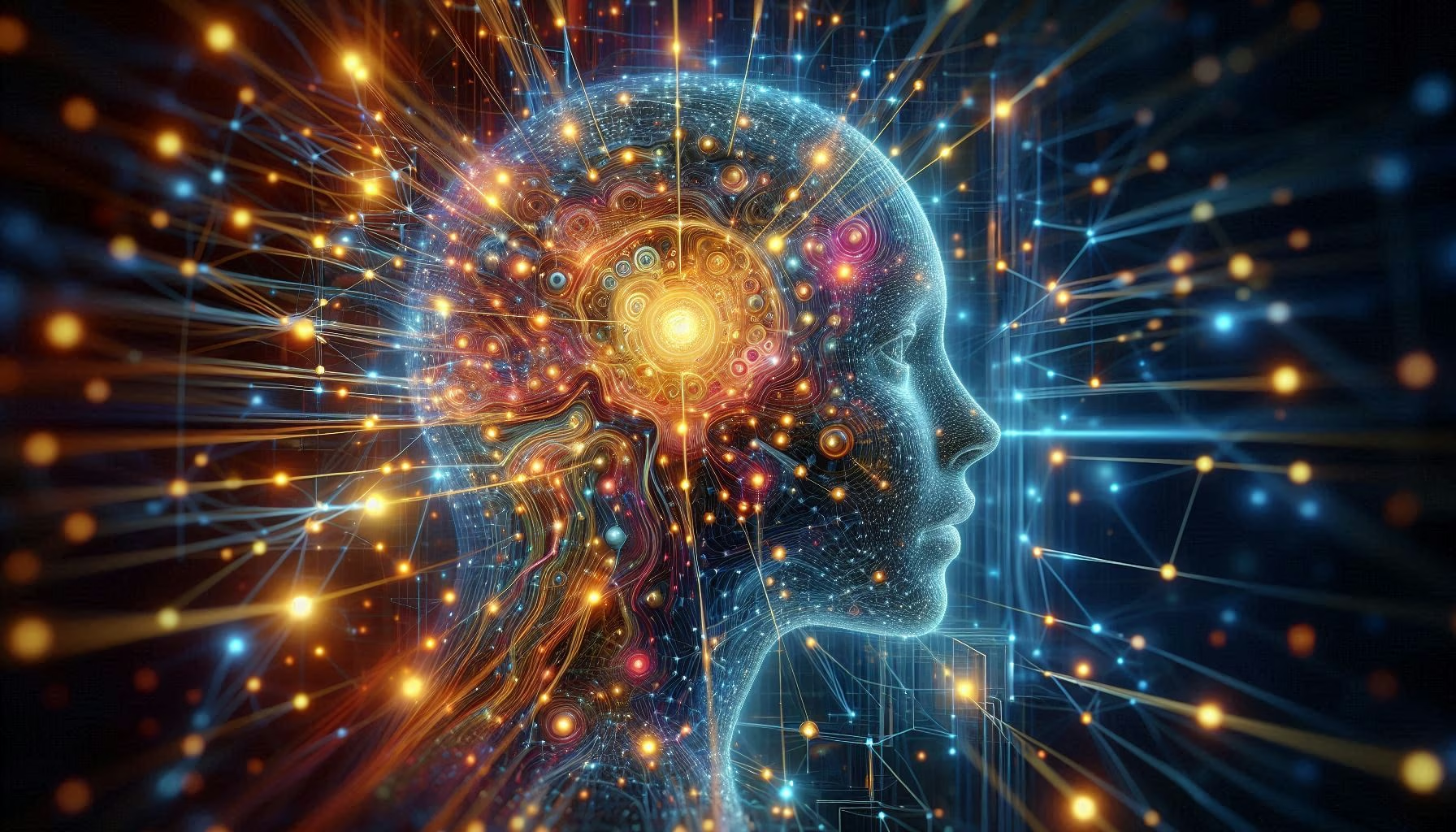
The Brain: Deep Learning Neural Networks
The real magic happens in the neural network – a complex AI system trained on millions of facial images with known ages.
How Neural Networks Learn Age Patterns
Think of training an age detection AI like teaching a child to estimate ages:
Traditional Approach (How Children Learn):
- See many examples: "This person with smooth skin is 20 years old"
- Build associations: Smooth skin → younger; wrinkles → older
- Make educated guesses based on patterns
AI Approach (Deep Learning):
- Process millions of facial images with labeled ages
- Automatically discover hundreds of subtle patterns humans might miss
- Create complex mathematical models that correlate facial features with age
The difference? The AI can process vastly more examples and detect incredibly subtle patterns that even trained dermatologists might miss.
What the AI "Sees" When Estimating Your Age
Modern age detection systems analyze multiple facial characteristics simultaneously:
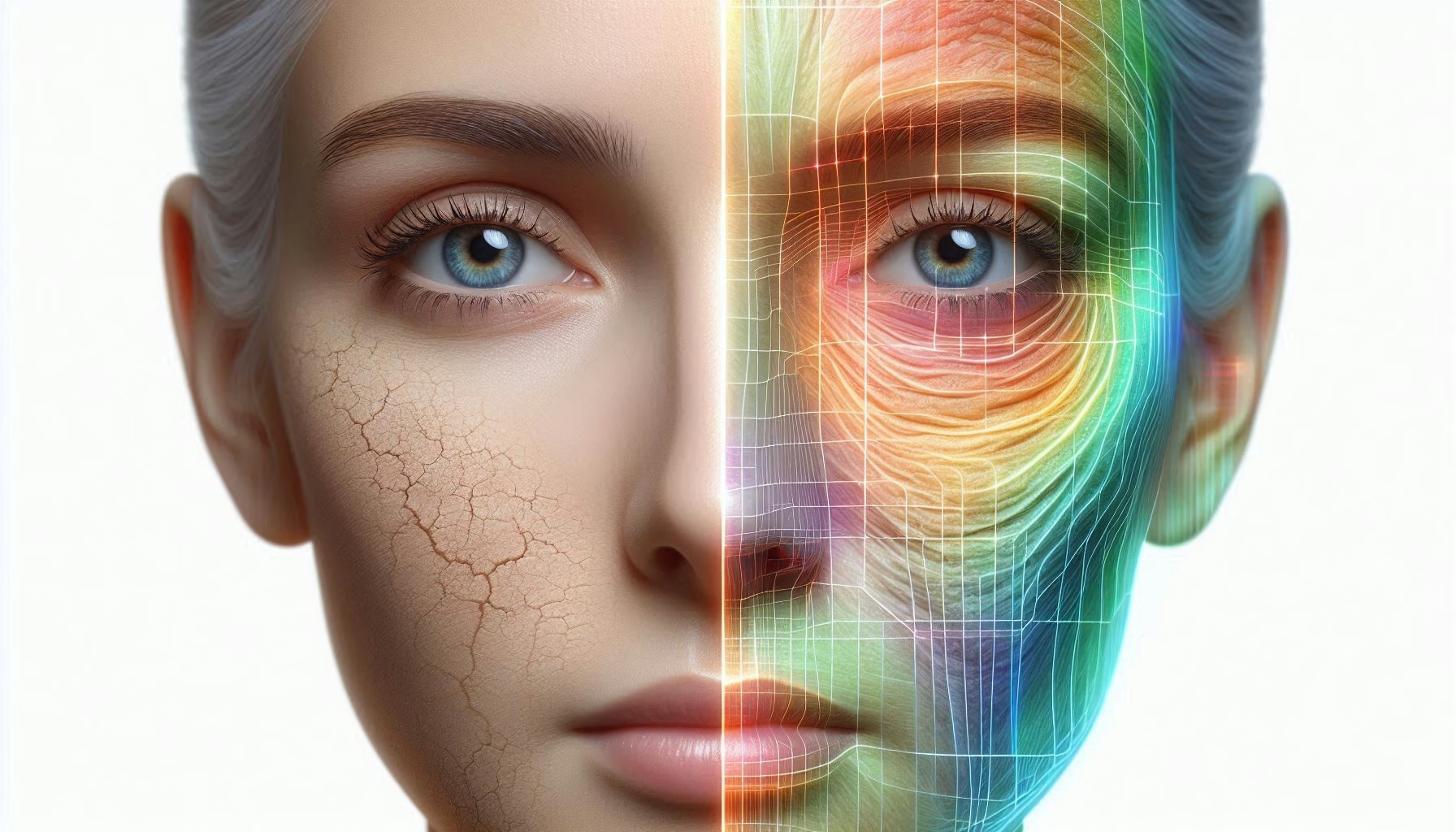
Skin Texture and Quality
- Fine lines and wrinkles: Distribution, depth, and pattern
- Skin smoothness: Texture uniformity and pore visibility
- Skin tone: Evenness and presence of age spots or discoloration
- Skin elasticity indicators: Firmness and sagging patterns
Facial Structure and Proportions
- Bone structure changes: Subtle shifts in facial proportions over time
- Facial volume: Changes in cheeks, temples, and under-eye areas
- Jaw definition: Sharpness and contour clarity
- Eye appearance: Position, size, and surrounding tissue
Soft Tissue Indicators
- Nasolabial folds: Depth and prominence of smile lines
- Marionette lines: Lines extending from mouth corners downward
- Forehead lines: Horizontal and vertical wrinkles
- Crow's feet: Lines around the outer eye corners
- Under-eye appearance: Bags, dark circles, and hollowness
The Training Process: Building an Accurate Model
Creating a reliable age detection AI requires massive amounts of data and computational power.
Dataset Requirements
Top-performing age detection systems are trained on:
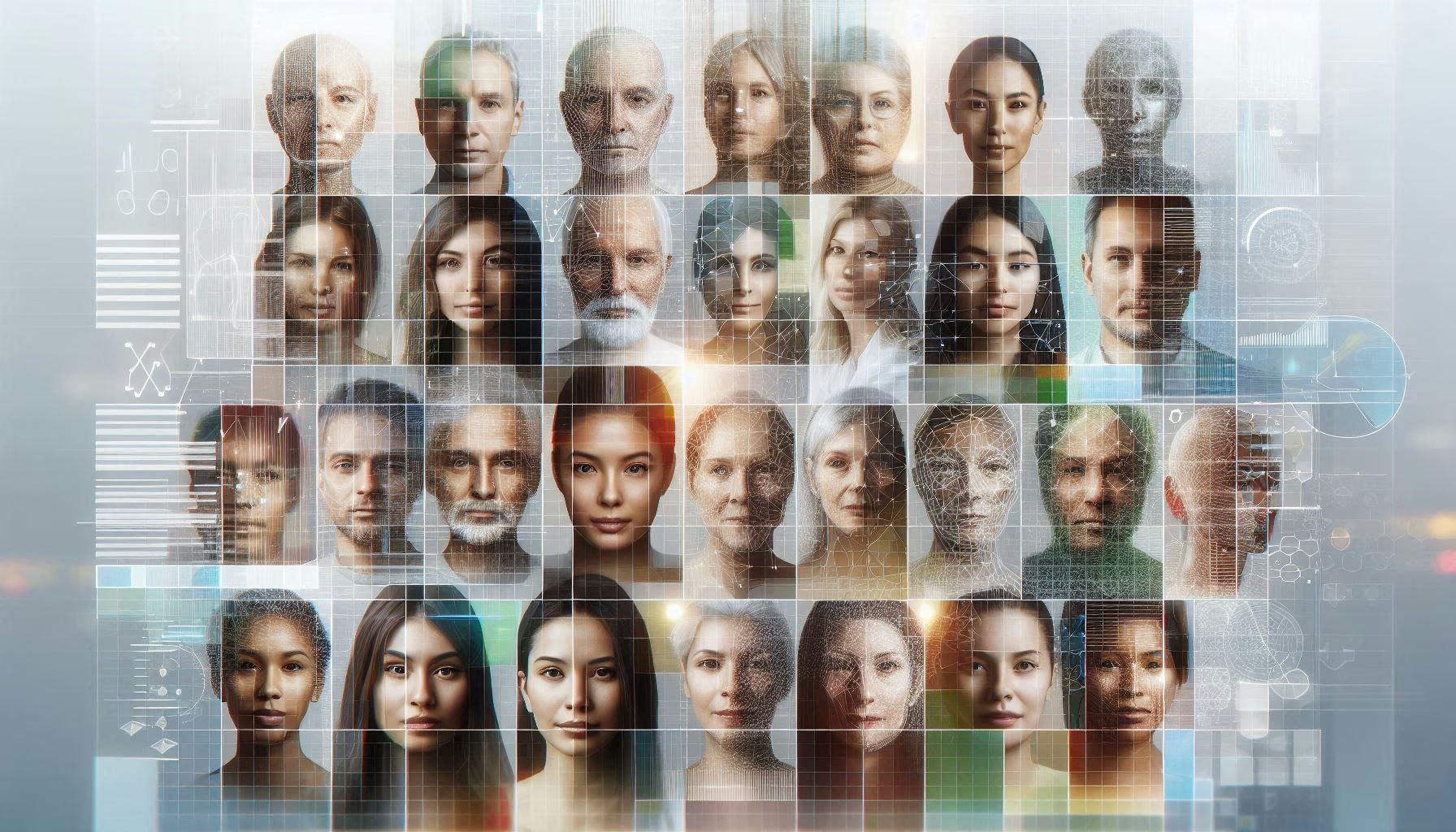
- Millions of facial images from diverse populations
- Wide age ranges: From teenagers to seniors (typically 15-85 years)
- Diverse demographics: Different ethnicities, genders, and geographic regions
- Varied conditions: Different lighting, angles, and expressions
For example, research-grade systems might be trained on 50,000+ images from databases like:
- MORPH (55,000+ images)
- FG-NET (1,000+ images with age progression)
- IMDB-WIKI (500,000+ celebrity images)
- Custom datasets from research institutions
The Learning Algorithm
The AI uses a process called supervised learning:
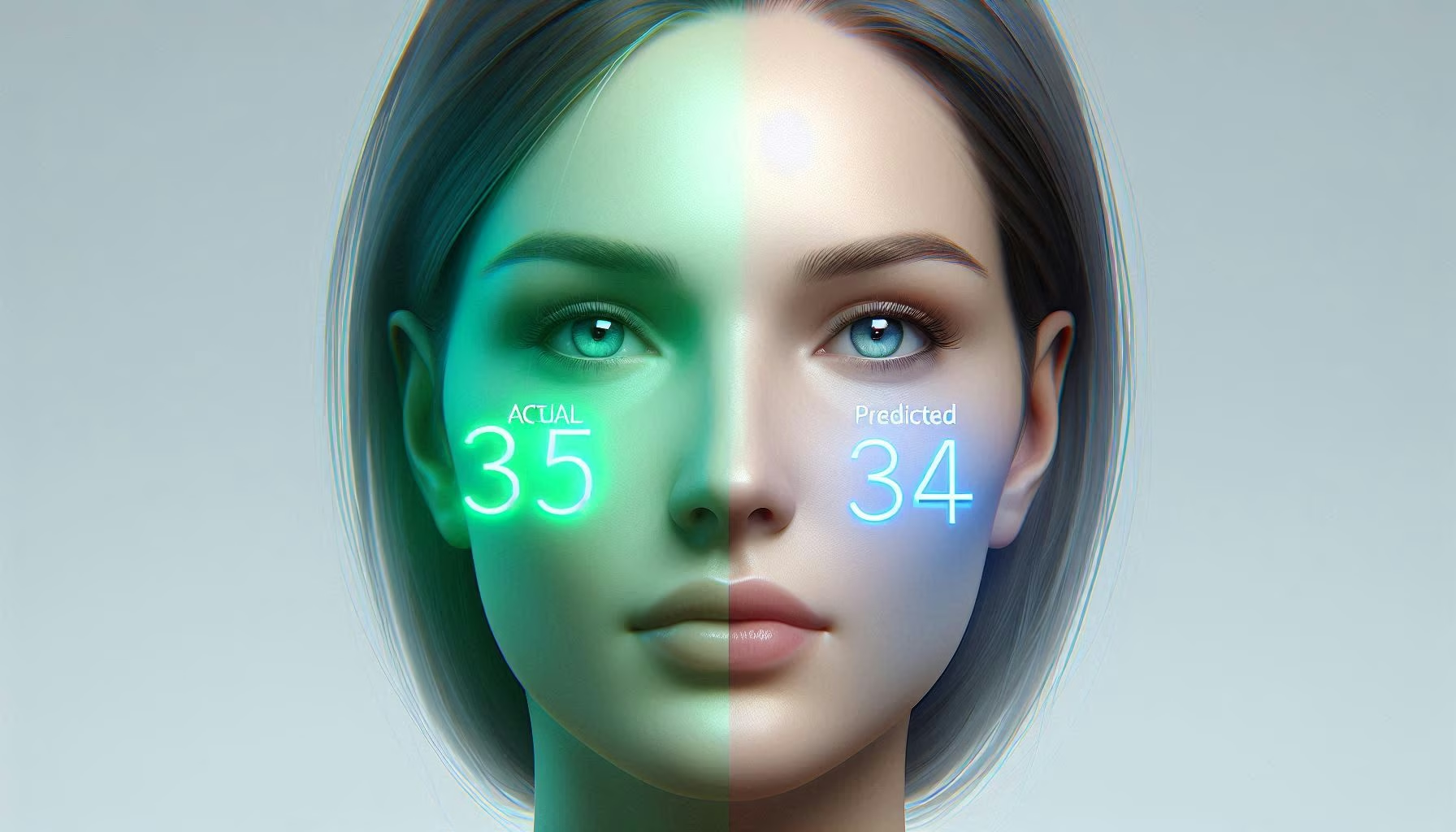
- Input: Feed the system a facial image
- Prediction: The AI estimates the person's age
- Comparison: Compare the prediction to the actual age (the "label")
- Adjustment: If wrong, the AI adjusts its internal parameters
- Repetition: Repeat millions of times until accuracy improves
Over time, the AI becomes incredibly good at spotting the subtle patterns that correlate with specific ages.
Accuracy and Limitations
How Accurate Is AI Age Detection?
Modern AI age detection systems achieve impressive accuracy:
- Average accuracy: ±3-5 years for most age ranges
- Best-case scenarios: ±2 years under controlled conditions
- Challenging cases: ±7+ years for very young or very old individuals
According to research published in Nature Scientific Reports, top-tier algorithms perform best with:
- Neutral expressions: 95% accuracy within 5 years
- Good lighting: Natural, front-facing illumination
- Clear facial visibility: No obstructions like glasses or masks
- Adults aged 25-60: The age range with most training data
Factors That Affect Accuracy
Several factors can influence how accurately AI estimates your age:
Photo Quality Factors:
- Resolution and clarity
- Lighting conditions (harsh shadows reduce accuracy)
- Face angle (frontal views work best)
- Camera distance (too close or too far can skew results)
Individual Factors:
- Ethnicity (systems trained on diverse datasets perform better)
- Gender (some systems show slight gender-based variations)
- Makeup and styling (heavy makeup may alter perceived age)
- Facial hair (can obscure aging indicators)
- Genetics (some people age faster or slower than average)
Environmental Factors:
- Sun exposure history (affects skin aging)
- Lifestyle factors (smoking, sleep, stress)
- Health conditions (can accelerate or decelerate aging)
Privacy and Security in Age Detection
A critical question many users ask: "Is my photo safe?"
How Privacy-Focused Systems Work
Reputable age detection services follow these principles:
- Immediate deletion: Photos are deleted within seconds/minutes after analysis
- No facial recognition: Age detection ≠ identity matching
- No database storage: Your face isn't compared to or stored in any database
- Encrypted transmission: Photos are encrypted during upload and processing
- Minimal data collection: Only age estimation data is generated, not personal identity
Important distinction: Age estimation technology analyzes facial features and patterns, not your unique identity. It's asking "how old does this face look?" not "who is this person?"
Real-World Applications Beyond Fun
While using age detection for entertainment is popular, the technology has serious applications:
Medical Research
- Health monitoring: Biological age vs. chronological age can indicate health issues
- Cancer treatment: Research shows facial aging patterns correlate with disease progression
- Clinical trials: Tracking aging effects of treatments
Security and Compliance
- Age verification: Ensuring users meet minimum age requirements
- Access control: Age-appropriate content delivery
- Retail compliance: Preventing underage purchases
Beauty and Wellness
- Skincare tracking: Monitoring effectiveness of anti-aging treatments
- Before/after comparisons: Objective measurements for cosmetic procedures
- Product development: Testing and validating anti-aging products
The Future of Age Detection Technology
AI age detection continues to evolve rapidly:
Emerging Technologies
3D Facial Analysis: Some systems now use depth sensors to analyze facial structure in three dimensions, improving accuracy.
Multi-modal Analysis: Combining facial analysis with other indicators:
- Voice analysis (vocal aging patterns)
- Hand analysis (skin and vein patterns)
- Gait analysis (movement patterns change with age)
Temporal Analysis: Video-based systems that analyze micro-expressions and facial movements over time.
Biological Age vs. Apparent Age: Advanced systems that differentiate between how old you look and your biological aging markers.
Ethical Considerations
As the technology improves, important ethical questions arise:
- Bias and fairness across demographics
- Consent and transparency in age estimation
- Accuracy standards and accountability
- Appropriate vs. inappropriate use cases
How to Get the Most Accurate Results
Want to test your facial age with maximum accuracy? Follow these tips:
Photo Preparation Checklist
✓ Optimal lighting: Natural light from a window, facing the light source ✓ Neutral expression: Relaxed face, slight smile is okay ✓ Frontal angle: Look directly at the camera ✓ Clear visibility: Remove glasses, hats, and move hair off your face ✓ Simple background: Plain wall or neutral backdrop ✓ Adequate distance: Face should fill about 60-80% of the frame ✓ Good resolution: Use a decent camera, avoid heavily compressed images ✓ No filters: Skip Instagram filters and heavy photo editing ✓ Natural appearance: Minimal makeup shows your true skin condition
Understanding Your Results
Remember that age detection provides an estimate based on appearance, not a definitive measurement. Several interpretations are possible:
- Younger than actual age: Great skincare, genetics, or healthy lifestyle
- Older than actual age: Sun damage, stress, or temporary factors (lack of sleep)
- Close to actual age: You're aging typically for your demographic
- Varying results: Different photos = different conditions = different estimates
Conclusion: The Art and Science of Age Detection
AI age detection represents a remarkable convergence of computer science, biology, and data science. While it's fun to discover "how old you look," the technology behind it is solving real-world problems in healthcare, security, and research.
The next time you upload a photo and get an instant age estimate, you'll know there's a sophisticated neural network analyzing dozens of subtle facial features, comparing them against millions of learned patterns, and generating an educated prediction – all in a fraction of a second.
Want to try it yourself? Use a high-quality, well-lit photo and see how AI estimates your facial age. Remember: it's just one data point about your appearance, not a judgment about your health, beauty, or worth!
Frequently Asked Questions
Q: Can AI age detection determine my exact biological age? A: No. AI estimates your apparent age based on visible facial features, not your biological or chronological age. Biological age testing requires medical tests like blood work and epigenetic analysis.
Q: Why do I get different ages from different photos? A: Lighting, angles, expressions, and photo quality all affect results. The AI analyzes what it sees in each specific image, which can vary significantly.
Q: Is AI age detection accurate for all ethnicities? A: Systems trained on diverse datasets perform well across ethnicities. However, some commercial systems may show bias if trained predominantly on specific populations. Look for services that explicitly address diversity in their training data.
Q: Can makeup fool age detection AI? A: Heavy makeup can alter perceived age by hiding or emphasizing certain features. Some AI systems are specifically trained to account for makeup, while others may be affected by it.
Q: How often should I check my facial age? A: For tracking skincare progress, monthly or quarterly checks provide meaningful data without over-analyzing natural day-to-day variations.